We Know We Can: Building Community Through Hip-Hop
In this episode, Theresa and Kathryn are joined by Andrew Wang, a K–12 music teacher who brings hip-hop culture to life in a neurodivergent-centered classroom. Drawing from his own experiences as a neurodivergent learner, Andrew shares how hip-hop became both a personal outlet and a powerful teaching tool. He describes his work in an inclusive school setting, where music supports not only musical growth but also communication, confidence, and social-emotional development. By incorporating elements like beatboxing, call-and-response, and student-selected music, Andrew creates an engaging environment where all students can participate and feel a sense of belonging.
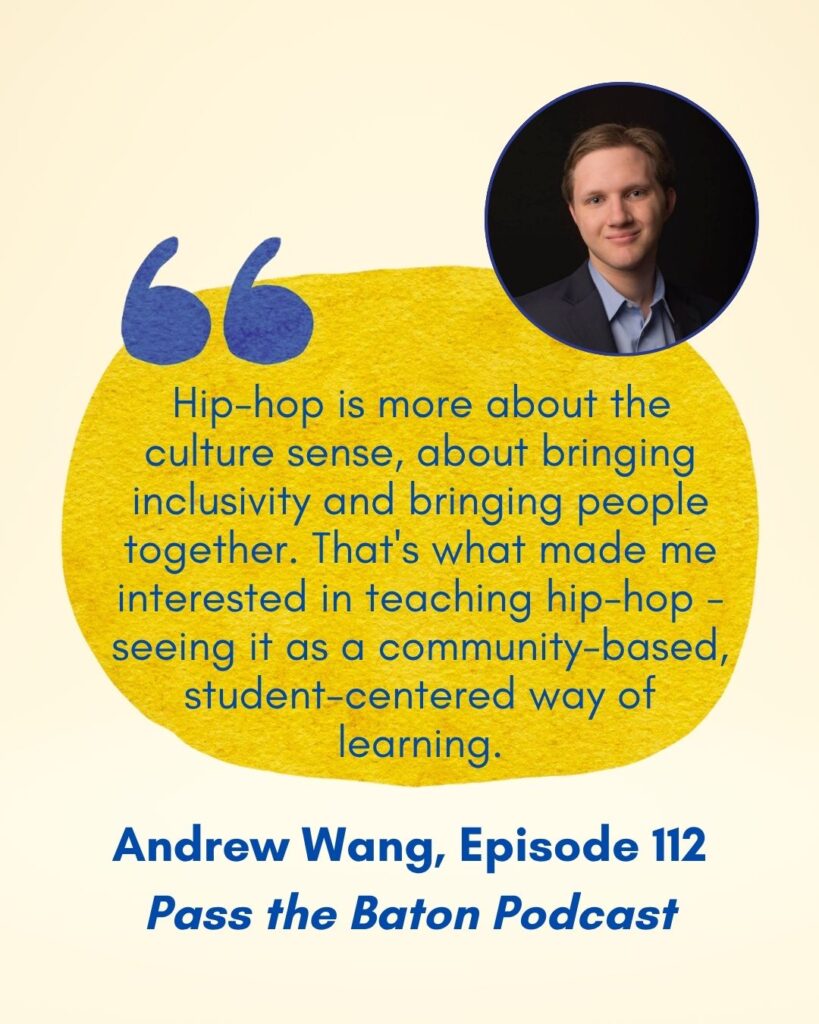
Throughout the conversation, Andrew emphasizes that hip-hop is more than just music, it’s a culture rooted in community, identity, and expression. He highlights practical ways teachers can bring hip-hop into any classroom, from general music to traditional ensembles, while still meeting standards and maintaining intentionality. The discussion also explores how hip-hop can foster deeper student connections, encourage critical thinking, and support lifelong musical engagement. Ultimately, Andrew makes a compelling case for expanding what counts as “valuable” in music education, showing how culturally relevant, student-centered approaches can empower learners of all backgrounds.
Listen to the full interview:
Here are some key takeaways from Episode 112:
- Hip Hop as Culture – Hip-hop is more than music. It’s a culture that builds community, fosters identity, and creates meaningful student connections.
- Student-Centered Learning – Using hip-hop invites student voice and choice, helping learners connect personal experiences to music and classroom content.
- Accessible Entry Points – Strategies like beatboxing and call-and-response create accessible, engaging ways for all students to participate in music-making.
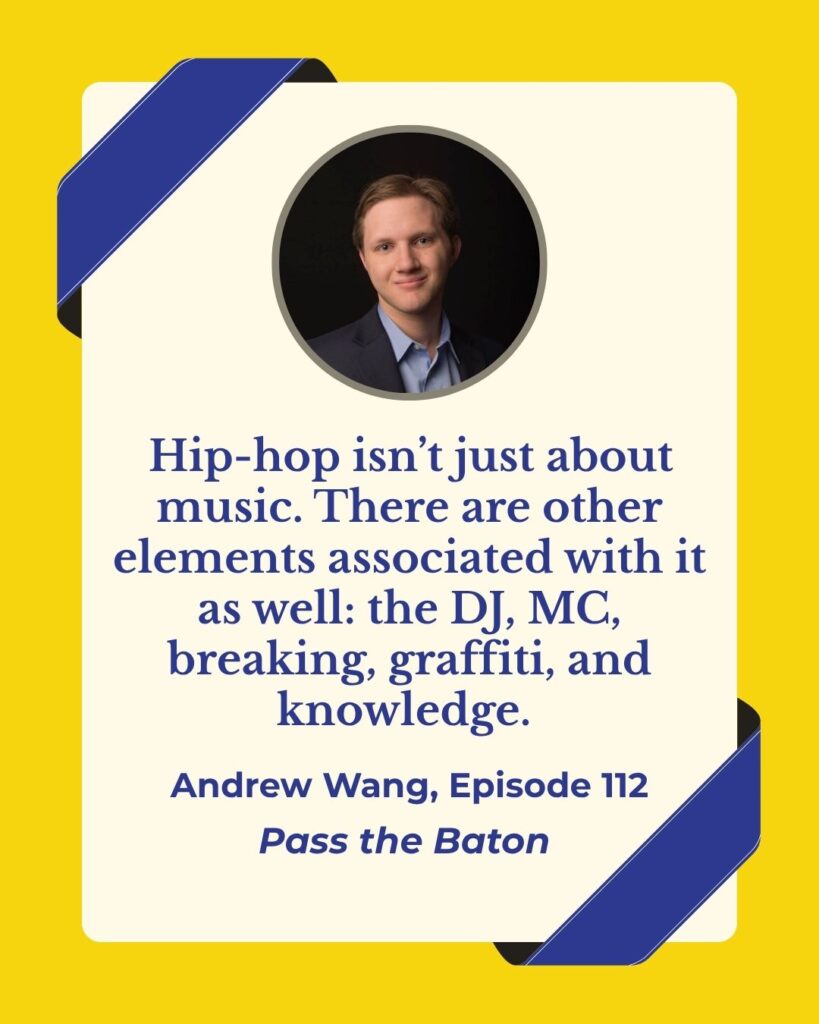
- Intentional Integration – Hip-hop can meet standards through intentional design, supporting musical skills, critical thinking, and cross-curricular connections in any classroom..
- Empowering Neurodiversity – Hip-hop creates inclusive spaces where neurodivergent students can express themselves, build confidence, and feel valued for who they are.
Connect with Andrew and learn more:
- Website: Neuro Hip Hop
- Email: hiphopneuroed@gmail.com
- Links
Other Resources to Check Out:
- Book: Hip Hop Can Save America, by Manny Faces
- Book: We Got Our Own Thang – Real Talk from AJ Woodson
- Book: Yonkers the Lost City of Hip Hop, by Jerome Enders
- Book: For White Folks Who Teach in the Hood, by Chris Emdin
- Book: From White Folks Who Teach in the Hood, by Chris Emdin and Sam Seidel
- Website: Neurodivergent Music Network
Learn more about Pass the Baton:
- Pass the Baton Book Study through VanderCook College of Music
- Join the Coffee Club
- Support Pass the Baton
- Amplify student voice with Exit Tickets for Self Reflection
Coffee Club Members: be sure to check out the bonus material available for this episode! Not a member? Join today → Pass the Baton Coffee Club
Ready for more?
You can check out the full interview on YouTube or your favorite podcast platform. Or you can listen right here, on Spotify Podcasts!
You might also enjoy these other episodes:
- Episode 62 – The Kids Come First: Student Ownership in Ensembles, featuring Kathleen Jacoby
- Episode 90 – Throw Away the Rubric: Ungrading the Music Room, featuring Chris Gleason
- Episode 77 – Inspiring Young Musicians: Passion and Purpose in Music Education, featuring Stephen Cox
- Episode 85 – Fostering Lifelong Learning through Reflective Partnerships, featuring Merlin Thompson