From Teacher to Facilitator: Making Space for Creativity
In episode 118, Kathryn and Theresa talk with elementary music teacher Ashley Cobb about creating music classrooms where students are active participants, creators, and decision-makers. Ashley shares how her own experiences as a young musician shaped her commitment to making music accessible and meaningful for every student. Drawing on music learning theory, improvisation, and modern band pedagogy, she describes how small opportunities for creativity can grow into a classroom culture where students choose repertoire, arrange and write their own music, collaborate with one another, and take ownership of their musical experiences.
Ashley also talks about her evolving role as a music educator—from teacher to facilitator—and the intentional work that makes student independence possible. From inviting students to suggest songs and instruments to creating opportunities for peer teaching and leadership, Ashley demonstrates how seemingly small choices can shift the center of the classroom toward students. Throughout the conversation, she reminds us that student-centered teaching doesn’t require a complete overhaul. Instead, it can begin with a simple pause: What could I let my students decide?
Listen to the full interview:
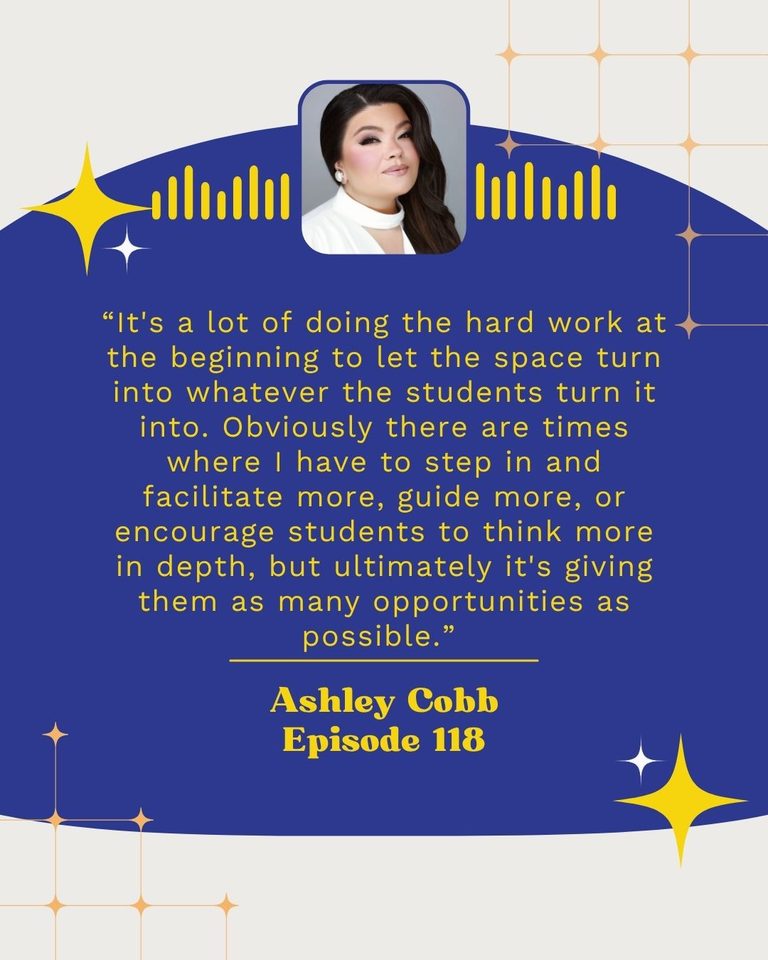
Here are some key takeaways from Episode 118:
- Give Students Choice – Small opportunities for student choice can build engagement, leadership, ownership, and deeper connections to music learning.
- Create Before Labeling – Let students experience, explore, and create music before introducing formal terminology, making musical concepts more meaningful and accessible.
- Facilitate, Don’t Prescribe – Shift from providing every answer toward modeling skills, setting expectations, and facilitating opportunities for students to lead.
- Make Music Relevant – Invite students’ musical interests, cultures, and experiences into the classroom to create meaningful connections and strengthen community.
- Start Small – Student-centered teaching doesn’t require a complete overhaul; begin with one small decision students can make themselves.
Listen Today!
You can check out the full interview on YouTube or your favorite podcast platform. Or you can listen right here!
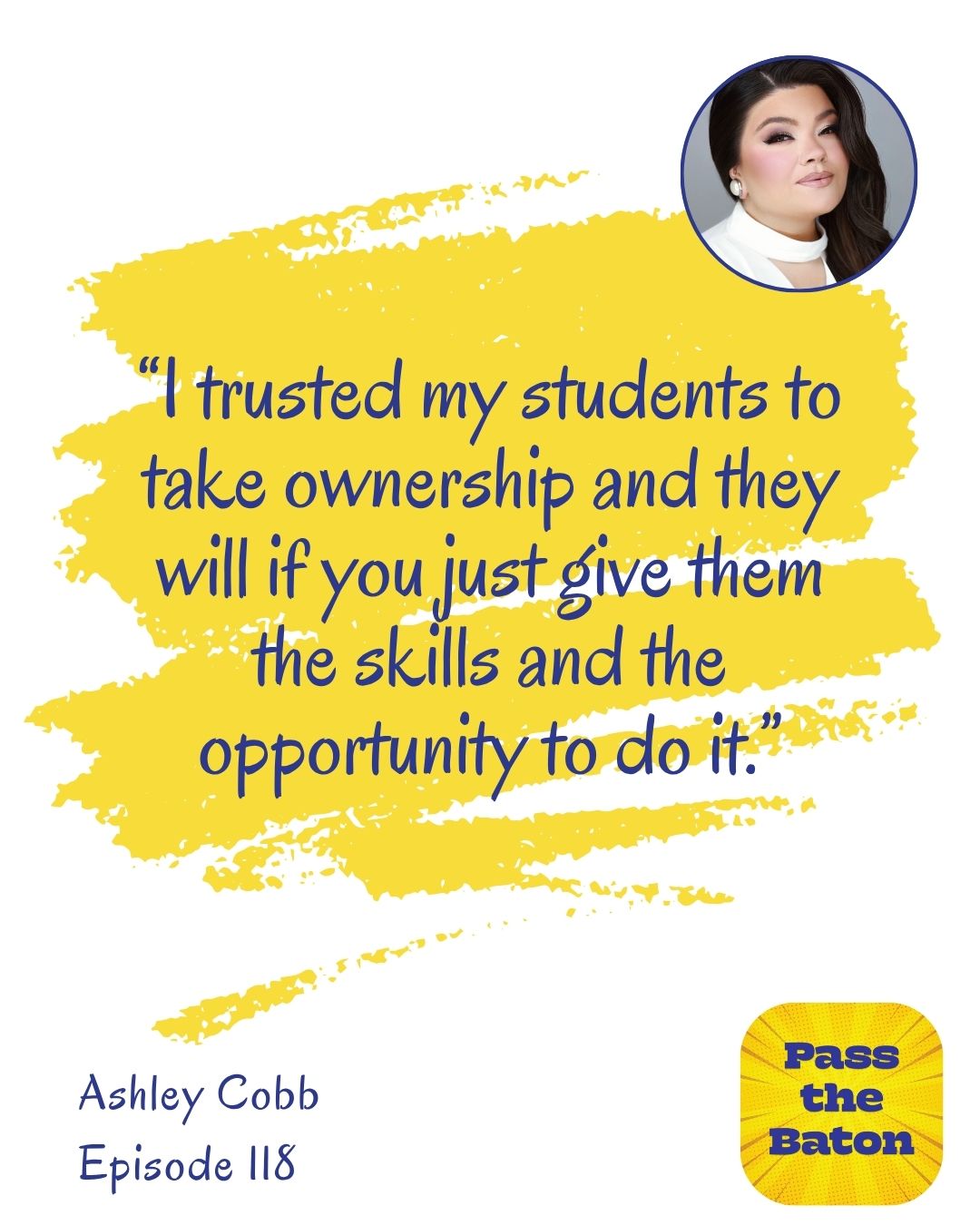
Connect with Ashley and learn more:
- Email: ascobb@richland2.org
- School website: https://www.cte.richland2.org/
- Instagram: @ashleyecobb, @missashleycobb_mao
- Music Will
You might also enjoy these other episodes:
- Episode 62 – The Kids Come First: Student Ownership in Ensembles, featuring Kathleen Jacoby
- Episode 90 – Throw Away the Rubric: Ungrading the Music Room, featuring Chris Gleason
- Episode 77 – Inspiring Young Musicians: Passion and Purpose in Music Education, featuring Stephen Cox
- Episode 85 – Fostering Lifelong Learning through Reflective Partnerships, featuring Merlin Thompson