Curriculum, Choice, and the Path to Lifelong Musicianship
In episode 105, Theresa and Kathryn welcome back longtime music educator Merlin Thompson, who reflects on nearly five decades of teaching and his evolving philosophy around lifelong music making. Merlin challenges the traditional, teacher-led “master–apprentice” model by introducing four curriculum models—teacher-led, student-led, shared, and neurodiverse—and explains how intentionally shifting between them can better honor student agency, diverse needs, and real-world musical engagement. Through vivid studio and classroom examples, he illustrates how student choice, leadership opportunities, and flexible pathways help learners build ownership, confidence, and sustainable musical habits that extend far beyond lessons, concerts, or exams.
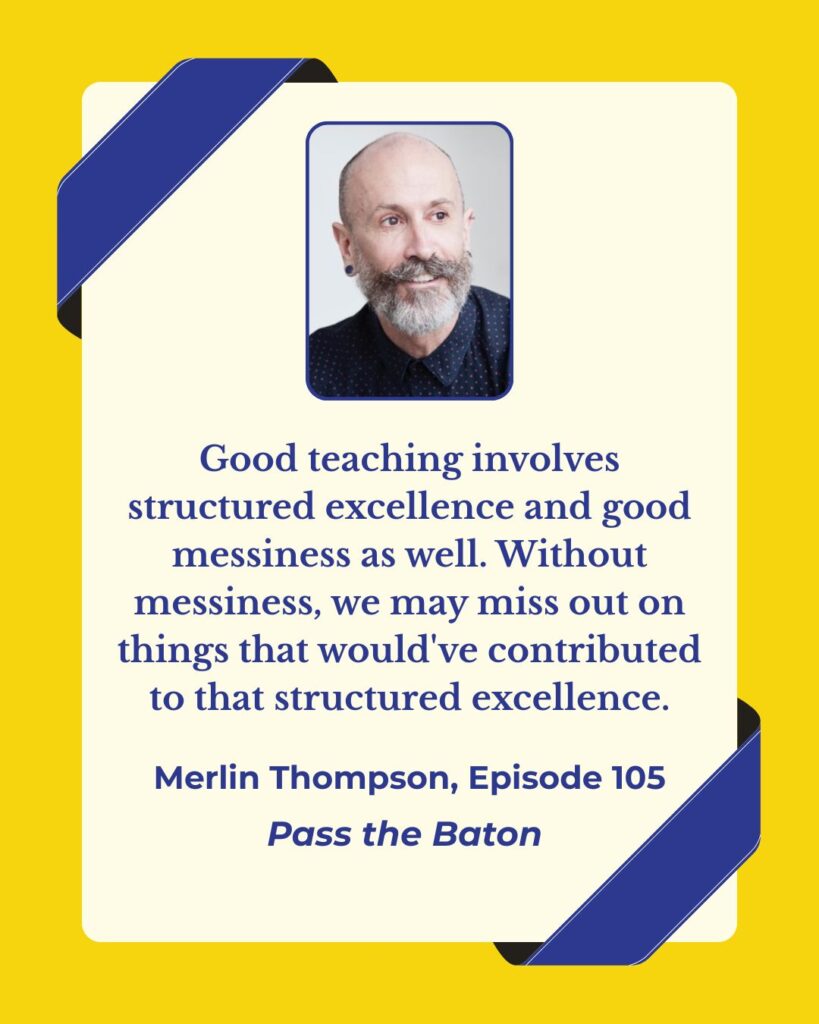
The conversation also explores how curriculum decisions connect to student wellbeing, motivation, and reflection. Merlin emphasizes the value of “structured excellence and productive messiness,” encouraging teachers to embrace experimentation, reflective practice, and small, low-risk shifts—such as inviting students to lead warm-ups, select repertoire, or revisit familiar music during high-stress days. Grounded in both experience and learning science, this episode offers practical, human-centered insights for music educators who want to move closer to their stated goal of lifelong musicianship while staying responsive to the students in front of them.
Listen to the full interview:
Here are some key takeaways from Episode 105:
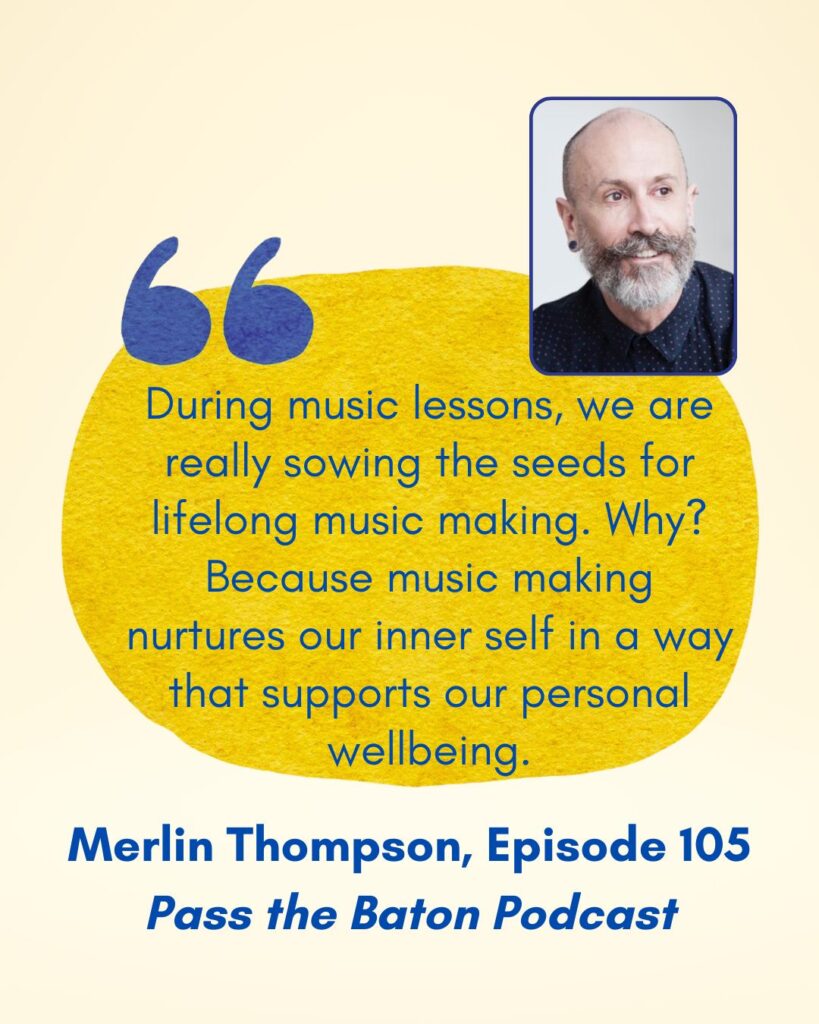
- Lifelong Musicianship – Music education should plant seeds for lifelong music making, not just short-term performance, exams, or teacher-defined outcomes.
- Curriculum Flexibility – Effective teaching moves fluidly between teacher-led, student-led, shared, and neurodiverse models based on student needs and context.
- Student Ownership – When students choose repertoire, lead processes, and make decisions, they develop agency that sustains musical engagement beyond school.
- Productive Messiness – Allowing experimentation, partial learning, and exploration strengthens learning and leads to deeper, more meaningful musical excellence.
- Music as Wellbeing – Music lessons can model how music supports emotional regulation, recovery, and balance—skills students carry into adulthood.
Connect with Merlin and learn more:
- Website – Teach Music 21C
- Book – More Than Music Lessons: A Studio Teacher’s Guide to Parents, Practicing, Projects, and Character
Coffee Club Members: be sure to check out the bonus material available for this episode! Not a member? Join today → Pass the Baton Coffee Club
Ready for more?
You can check out the full interview on YouTube or your favorite podcast platform. Or you can listen right here, on Spotify Podcasts!
You might also enjoy these other episodes:
- Episode 62 – The Kids Come First: Student Ownership in Ensembles, featuring Kathleen Jacoby
- Episode 90 – Throw Away the Rubric: Ungrading the Music Room, featuring Chris Gleason
- Episode 77 – Inspiring Young Musicians: Passion and Purpose in Music Education, featuring Stephen Cox
- Episode 85 – Fostering Lifelong Learning through Reflective Partnerships, featuring Merlin Thompson