4 More Mistakes to Avoid When Fostering Student Ownership
In this episode, Kathryn and Theresa revisit the topic of student ownership and unpack four common mistakes teachers can unintentionally make when trying to foster it in their music classrooms. They discuss the “bait and switch” of offering choice only to revert back to teacher-centered control, the tendency to prioritize “my program” over students’ identities and interests, the assumption that students automatically know how to make meaningful choices, and the misconception that ownership is an occasional add-on rather than a guiding mindset. Throughout the conversation, they emphasize that these missteps are normal—and reflective practice is key to growth.
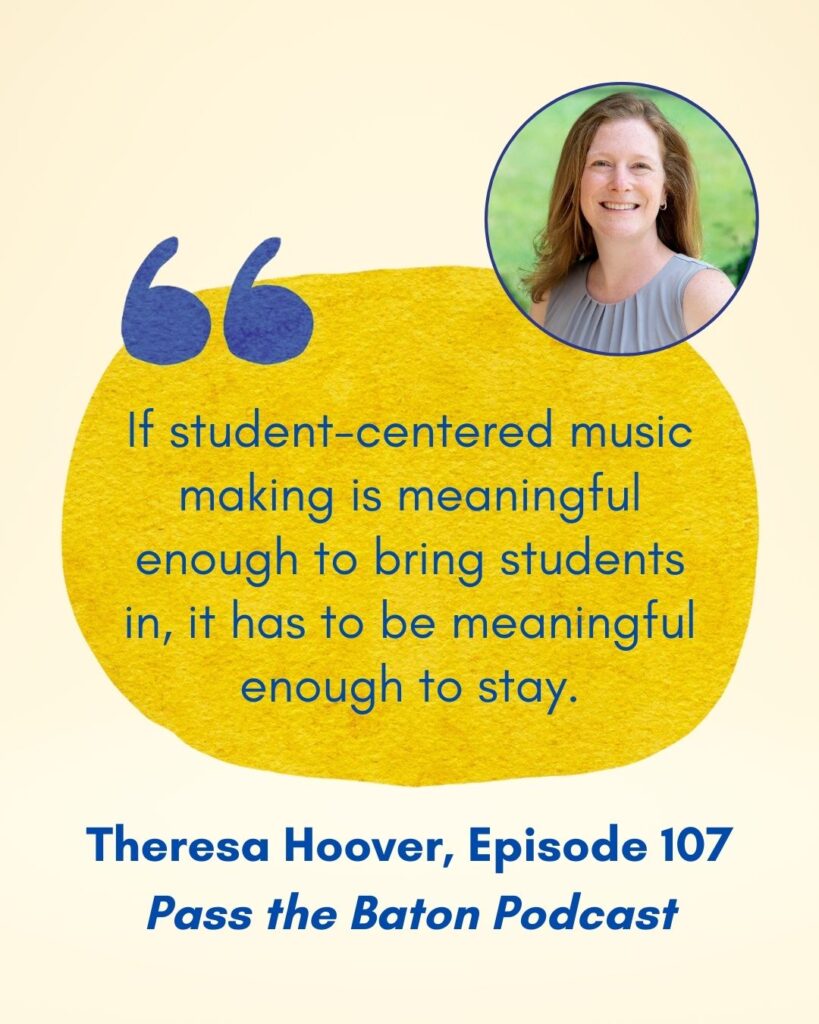
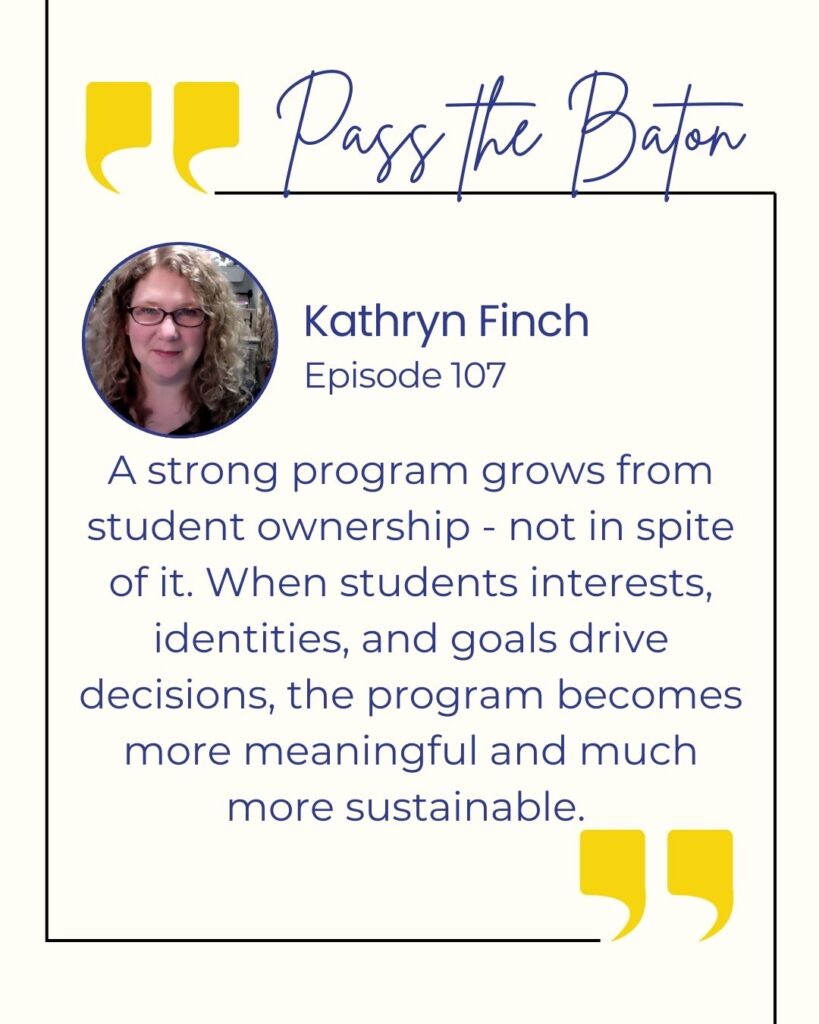
Listeners are encouraged to reframe their thinking: if student-centered music-making is meaningful enough to engage students, it must remain meaningful beyond the hook. That means scaffolding decision-making skills, embedding ownership into daily routines, and regularly asking, “Whose needs is this decision serving—the program or the students?” With practical examples and honest reflection, this episode offers a supportive reminder that strong programs grow from student ownership—not in spite of it.
Listen to the full interview:
Here are some key takeaways from Episode 107:
- Bait and Switch – If student choice brings them in, it must remain meaningful—not disappear once engagement is secured.
- My Program vs. Theirs – Shift from protecting “my program” toward building a shared music experience shaped by students’ identities and goals.
- Scaffold Choice – Students need modeling and structured support to develop confidence and skill in making meaningful musical decisions.
- Ownership Mindset – Student ownership isn’t an occasional project—it’s a daily design principle guiding rehearsals, assessments, and reflection.
- Pause and Reflect – Before routine decisions, pause and ask: Is this serving the program—or truly serving students?
Learn more about Pass the Baton:
- Episode 64 – 4 Mistakes to Avoid When Fostering Student Ownership
- Join the Coffee Club
- Support Pass the Baton
- Amplify student voice with Exit Tickets for Self Reflection
Coffee Club Members: be sure to check out the bonus material available for this episode! Not a member? Join today → Pass the Baton Coffee Club
Ready for more?
You can check out the full interview on YouTube or your favorite podcast platform. Or you can listen right here, on Spotify Podcasts!
You might also enjoy these other episodes:
- Episode 62 – The Kids Come First: Student Ownership in Ensembles, featuring Kathleen Jacoby
- Episode 90 – Throw Away the Rubric: Ungrading the Music Room, featuring Chris Gleason
- Episode 77 – Inspiring Young Musicians: Passion and Purpose in Music Education, featuring Stephen Cox
- Episode 85 – Fostering Lifelong Learning through Reflective Partnerships, featuring Merlin Thompson